Kevin Willmott’s mother ran a pool hall in Junction City in the days when 9th Street in that army town was the red light district.
Those were also the days when a black man couldn’t be served in a cafe run by whites.
If you wanted to sit down to eat in a restaurant, it had to be owned by a black, he remembered for the Buster Keaton celebration audience Friday afternoon.
Willmott used his Junction City memories to make a movie, “Ninth Street.”
He also drew upon the experiences he and his family had with racism in America to make another movie, “CSA — the Confederate States of America” which is based on the fiction that the South won the Civil War and imagines what the country would be like today if that had been the case.
Willmott is still making films which teach — and lecture — but is also an associate professor at the University of Kansas.
Many of his films were created in partnership with another writer and he has commuted between his home in Lawrence and studios in New York and California while producing them — but always considering Kansas home.
“We just let people think we’re dumb enough to want to live in Kansas,” he joked.
His most recent work “The Only Good Indian,” tells the story of the boarding houses established in Kansas and elsewhere that were designed to brainwash Native American boys so they forgot their native customs and became “Americanized.” The homes were brutal — the scenes remind one of the inhuman ways ophans were treated in Charles Dickens’ England — the young men in them were often kidnapped and treated like prisoners. The film is currently playing on the STARZ chnnel and was selected for the 2009 Sundance Film Festival.
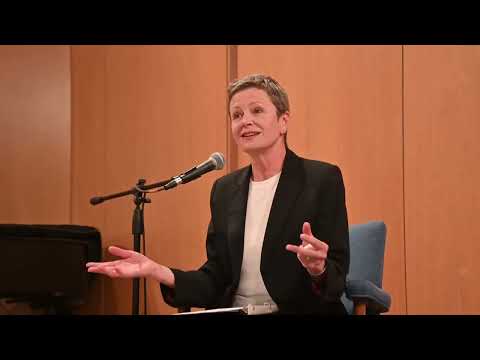
Willmott’s program on Kansas film makers was followed by Jill Warford, executive director of the Gordon Parks Center for Culture and Divsersity at Fort Scott Community College, who told of Gordon Parks’ brilliant successes as photographer, novelist, screen play writer, poet, musician and film director.
Parks was born in Fort Scott, but left for Minnesota when he was 15 and decided to become a photographer. Without formal schooling, he became one of the nation’s most noted photographers and moved from there to succeed in many other fields associated with the arts.
“The Learning Tree” was the first semi-autobiography he wrote. It was made into a motion picture, and Parks showed his versatility and wide-ranging talents by agreeing to write the movie script, compose music for the score and direct the movie, thereby becoming the first African American to direct a movie for a major studio.
Warford invited the audience to learn more about Parks by visiting the museum in Fort Scott.
Festival focuses on more than film history