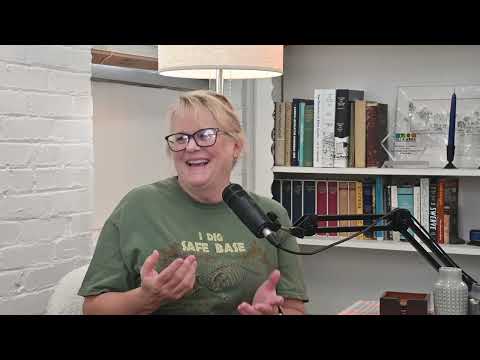
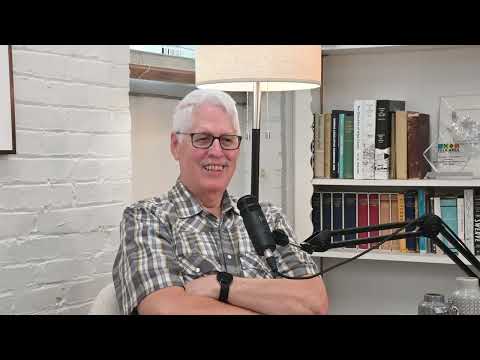
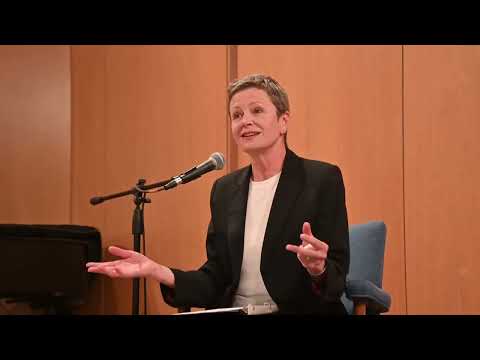
Monday night’s legislative forum was almost a good time.
Among the good-sized crowd were lots of smiles, warm handshakes, and hearty thumps on the back. No matter the topic, most shook their heads in strong agreement.
Trouble was, the news just stank.
“I’m sorry to be all doom and gloom, but that’s how it is in Topeka,” said Rep. Kent Thompson, who serves the 9th district.
Other legislators were Rep. Adam Lusker, D-Frontenac, and Sen. Caryn Tyons, R-Parker, as well as Allen County commissioners Jerry Daniels and Tom Williams.
For the better part of two hours the three legislators were refreshingly honest about their struggles of serving in Topeka.
“It boils down to people’s expectations of what they want from their government,” Thompson said. “If that includes good schools, prisons, hospitals, highways and social services, then we’ve got to be willing to pay for them.
“As it is, it’s the goal of ultra-conservatives to starve us of these things and Gov. Brownback has been very clear he’s going to die by the sword with his policies.
“If we don’t have any expectations of state government, then sure, we can cut the budget more.”
Members of the audience expressed their concerns not only about the current budget, which is projected to be $190 million in arrears for the fiscal year beginning July 1, but also about future cuts mentioned in an efficiency study that was commissioned by the legislature.
“Are we going to see more?” asked Tony Leavitt, president of the local board of education.
Without raising taxes, none of the legislators could see any other way to paint themselves out of the corner.
Projects and programs targeted in the efficiency study are Iola’s Department for Children and Families office, some of the services of Tri-Valley Developmental Services, the Health Homes program for the mentally ill and a health insurance plan for state employees that shifts more of the burden on employees.
“This is not the Kansas I grew up in,” said John Masterson, president of Allen Community College. “The people who are least able to fight for themselves are the ones being squeezed out vital services.”
Rep. Lusker said political decisions in Topeka “follow the money.”
Consolidating the DCF offices in El Dorado, for example, might save money, but would put its services out of reach for a majority of its clients who don’t have reliable transportation.
Rep. Thompson encouraged audience members to keep their eyes “wide open,” as the efficiency study is further discussed.
“It’s up to us to push back,” he said.
Nathan Fawson of the Southeast Kansas Mental Health Center said cutting the Health Homes project in its infancy is shortsighted.
Begun in the summer of 2014, the project helps integrate the mental, dental and medical services for the state’s mentally ill who are on Medicaid.
“Statistics show these people typically die 25 years earlier than their healthy counterparts,” he said.
Health Homes not only provides this segment of the population with vital services, but also is a cost-savings to the state in that it manages chronic conditions, limiting visits to a hospital’s emergency room, which are a hundredfold more expensive than an office call.
Since its launch, the program has served 720 people in the six-county area of the mental health center, Fawson said.
Foster care in the state has also drawn scrutiny of late.
Privatized since 1996, foster care lacks adequate oversight, audience members said.
“To hear the horror stories, it’s nothing short of horrendous,” said Arlyn Briggs, rural Kincaid, who said he has had experience raising foster children.
Sen. Tyson agreed, saying she has “grave concerns” about its management.
“We’ve got children in harm’s way,” with the system, she said.
Tyson said she’s not a fan of privatizing what she deems should be a responsibility of government, pointing to not only foster care but also the state’s Medicare program, now called KanCare.
“We asked for RFPs (referrals for proposals) and not one Kansas company bid on managing our program. Now we’ve got out-of-state companies running our Medicare system.”
While Tyson said she’s all for small government, it’s quite another thing for the business of government to be controlled by a small cadre as seems to be the preference of Gov. Brownback.
“I’m on the outside looking in,” she said. This is Tyson’s sixth year as a legislator, the last four as a senator.
Tyson complained about state officials not communicating with her about issues, including moving DCF jobs to Chanute, land purchases by the Department of Wildlife, Parks and Tourism and problems at Osawatomie State Hospital.
“It’s tragic, what’s happening at Osawatomie,” she said, referring to a recent decision by Medicare to withdraw funding at the hospital.
“And our governor doesn’t even want to appeal that decision and try to get the funding back. We have an administration that wants to privatize the state hospital. Forty-six counties use that hospital.”
Tyson said she has tried to keep track of how funding is being spent at the state hospital, but said its employees “have been told not to talk to me.”
THE LEGISLATURE is increasingly divided not only between ultra-conservatives and conservatives and moderates, but also between those from urban and rural areas of the state, said Tyson.
One place this makes a difference is in respect to farmland and how it is valued. From an urban perspective this is land that is undervalued, and hence under-taxed. Instead of being taxed on the value of its production, urban legislators would like to see it taxed on its market value.
“If this passes, farmers would see their property taxes increase several-fold,” Rep. Lusker said.
Kansas farmers are also losing their political clout, Lusker said, as their numbers dwindle.
Estimates by the Kansas Department of Revenue said such a change could increase the value of agricultural land statewide by $890 million. Urban politicians are using public education, whose funding largely relies on property taxes, as a means to draw support for the measure, though it never made it out of legislative committee in either the House or Senate in 2015.
AS FOR EDUCATION, all the legislators warned, “be careful what you wish for.”
Yes, the block grant system enacted last year has reduced funding to schools, but if school finance were to be addressed this year, it could result in even worse circumstances.
Ultra-conservative legislators are feeling threatened, they said, and as a “last hurrah” could pass an even more punitive funding measure.
The block grant was intended to last two years, during which legislators would review the school funding mechanism as a whole.
This was one subject where Sen. Tyson shared a difference of opinion with Thompson and Lusker.
Tyson maintained too much money is being directed to state schools and the system needs to be overhauled to better direct funds.
Thompson and Lusker contend the previous system, which took into account an area’s demographics and student needs, was a particular benefit to poor districts such as those in southeast Kansas.
“A good formula would be very similar to what we had, if it were fully funded,” Lusker said. “It met the equalization need that the constitution requires.
“Ultra-conservatives and this administration have demonized public education.”
Allen County’s Farm Bureau office sponsored Monday night’s forum.