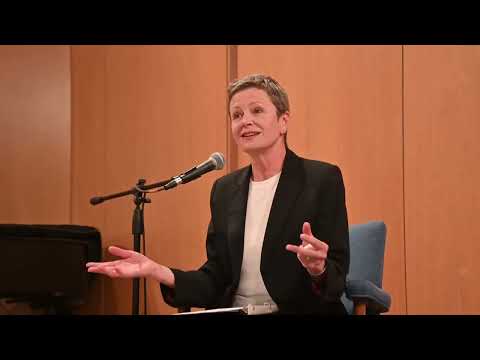
The second in a series of public forums surrounding proposed construction of new elementary and high schools in Iola grew a bit more emotional Tuesday than did its predecessor. RAY MALONEY, owner of Ray’s Metal Depot in LaHarpe, peppered Koehn with questions surrounding the proposal. THERE WERE several speaking in favor of the construction project, including retired principal and lifelong Iolan Ken McGuffin. VOTERS will go to the polls Nov. 4 to decide on a pair of referendums for the proposed $50 million project — an ad valorem tax levy that would increase property taxes a net 9 mills over what’s spent this year; and portions of a half-cent sales tax in front of Iola voters. (The other half of the added sales tax revenues would go to the city for capital improvement projects).
A crowd of about 50 gathered at the Jefferson Elementary School gymnasium to once again look at the district’s needs.
There were morsels of new information in Tuesday’s presentation.
Building anew would save nearly $700,000 from the district’s budget annually, said Jack Koehn, superintendent of USD 257 schools. The savings includes less spent in utilities ($124,000) and large and small repairs ($320,000), as well as that realized with one fewer administrator ($70,000). Other savings would be realized in not having to duplicate resources and having to hire fewer substitute teachers each day.
With the district’s current facilities — average age of 80 years old — “we’re spending more and more on maintenance, and digging ourselves into a deeper hole,” Koehn said.
In addition, an economic consultant firm, Impact Data Source of Austin, Texas, estimated the proposed construction would be a financial boon to the area.
According to the study, construction activity would pump $59.6 million into Iola’s economy, the report said, creating nearly 200 total jobs during construction and provide $20.4 million in salaries for area workers and other employees. The projects will create more than $5.1 million local taxable sales, generating more than $115,000 for city and county taxes.
While only 18 percent purportedly walk to “neighborhood” schools today, how many fewer would be able to walk to a campus more than two miles away, Maloney asked. And if traffic surrounding each of the schools today is considered hazardous to students, would the problem be exacerbated by putting all of the district’s elementary schools in one location?
The district will continue to use the old school sites as bus pick-up and drop-off sites for students, Koehn responded, so children still could walk the same routes they do today. Each of the bus stops would have adult supervision, he noted.
Meanwhile, the spacious areas surrounding each of the proposed school sites would be designed to keep bus and car traffic segregated, mitigating what Koehn describes as the most prominent traffic issue.
The district would receive added state funding for transportation, Koehn said, in response to another of Maloney’s questions. The added bus routes “would be a wash” financially, he said.
Maloney grew impassioned as talk turned to curriculums and educational opportunities for students.
He criticized USD 257 for dropping its building trades program, and for not developing other technical trades courses that would better serve students who will not earn a college degree, and for the others who have no intention of going to college at all.
Because the district fails to produce skilled laborers, many locals will not have the opportunity to participate in the proposed construction, Maloney said.
“All I hear about is technology,” Maloney said. “It seems like they’re teaching students to sit at a computer instead of building things with their hands.”
“Our schools have served quite a purpose in this community, and educated a lot of us,” he said. “We have a lot of great memories from these old halls.”
He noted that Lincoln was less than 10 years old when he first attended.
“It was a new school then,” he said. “Somebody invested in me in this community. They had to tear down some old buildings, and there may have been some memories in those old buildings, too.
“It’s really a small cost,” to build anew, he opined. “It’s our last great opportunity for this town to do something like this. We had a bond issue 30 years ago, and some of the same naysayers today came out against that then. Now, they’re telling me, ‘Well, we should have done this 30 years ago.’
“Does every other community have it wrong and we have it right?” he asked, referring to the majority of school districts across the state who have built new schools in recent years.
Improved accessibility remains a dire need, retired IMS teacher Donna Houser added. She recalled days when her husband helped carry a wheelchair-bound student to the third floor of the middle school each day, a feat markedly similar to Jefferson Principal’s Brad Crusinbery today.
Several times a day Crusinbery carries a third-grader up and down two flights of stairs in Jefferson Elementary because she is unable to walk the stairs. The school lacks an elevator.
LESLEY SKAHAN has two children attending Lincoln Elementary School and her youngest, who is disabled, attends McKinley.
“From a parent of a special needs child, there’s so much needed” at McKinley, she said. “And that’s a little thing. I’ve seen the brown water coming out of sinks. It’s not right that janitors have to come in and run the water for 30 minutes before it can be used.
“It’s not 1960 or 1980 any more. It’s time for a change,” she said. “To me, he’s worth it. All of these kids are worth it.”
The district will host two other forums and a vendors fair in the run-up to the election. The next forum is Oct. 9 at Lincoln.
The vendors fair, to find locals who might be able to participate in the construction project, will be from 6 to 8 p.m. Oct. 7 at the Riverside Park Community Building.
Just as importantly, more than half of the funding (51 percent) for the bond and interest would come from state aid.
If approved, new elementary and high schools would be built, presumably on land sandwiched around the Prairie Spirit Trail on the north side of Oregon Road. Jefferson, Lincoln and McKinley elementary schools would close, as would Iola High School and its satellite buildings would close.
Meanwhile, crews would do some remodeling at Iola Middle School, “to make it last a little longer,” because the bond issue otherwise would be too expensive to build a new middle school at first.
The district’s needs fall in four categories: safety and security, including parking and traffic, accessibility and protection from severe weather; educational efficiencies, such as inadequate and inappropriate environments for special education students and lack of technology at some schools; operational efficiencies (the increasing costs to maintain the district’s aging buildings; and providing an adequate educational environment.
Forum highlights savings