With all of their strengths, both Iola and Humboldt have challenges that aren’t unique among small, rural communities these days, Mark Fenton admits.
Both have attractive, historic downtown squares — “a lot of raw material that other communities would die to have,” he noted.
But both also have a shrinking downtown business core, littered with vacant buildings, he noted.
“Are they as lively as I’d like?” he asked. “No.”
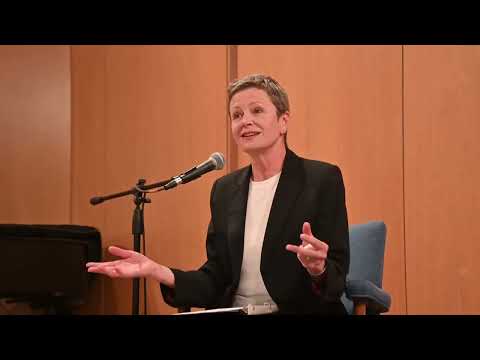
Fenton, one of the country’s foremost authorities on creating safe, walkable, bike-friendly communities, capped a three-day visit to Allen County Tuesday as part of a series of events sponsored by the Health Care Foundation of Greater Kansas City, and organized by Thrive Allen County. Fenton spoke with the Register after his presentation.
Fenton listed off a series of possible elixirs for both communities Tuesday at a community breakfast hosted by Miller’s On Madison.
His presentation focused on five overriding principles:
1. Focus on the downtown.
2. Develop a “complete streets” policy.
3. Make existing trails transportation corridors and enhance connections to them.
4. Design for vibrant businesses.
5. Create a “Safe Routes To School” plan.
Fenton’s background includes competing at the international level as a speed walker. In addition, he serves as civil engineer. The MIT graduate also has a minor in economics.
Focus on the downtown
“One of the most important things a community can do is restore the economic vibrancy of a downtown,” Fenton said.
The clearest path to a revitalized core in both Iola and Humboldt is to focus on second-story housing in and near both town squares.
“You need people populating those (upstairs apartments). They’re the first customers for the downtown businesses,” Fenton said. “The second are people who live a block or two or three away.”
Iola’s plans to build a grocery store and nearby apartment complexes at the old Allen County Hospital site is particularly encouraging, Fenton said.
“Make it phenomenal for the residents, and then it’ll be a place people want to come visit,” he said. “If you try to make it just a place to visit, you’re going to find yourself struggling to find the latest gimmick.
“It also means towns have to make this courageous decision to slow development out on the edge,” he continued. “You’ve got finite energy for development. If you let it all happen out by Walmart, it’s going to undermine what happens here. That means you have to have the guts to say we’re not going to rezone agricultural land for another housing subdivision on the north side. Encourage that developer to do some second-story development down here, or do neighborhood housing. If your goal is more houses on the edge, those people are going to drive to Walmart to shop. They’re not coming to downtown.
“I’m not knocking Walmart,” he concluded. “It just shouldn’t be at the exclusion of these downtown businesses.”
Complete streets policy
“Complete streets is a broad principle,” Fenton said. “It says, at the heart, every time we touch a road, we’re going to take into account pedestrians, bicyclists, transit and motor vehicle traffic. We’re not just going to design for cars, and if there’s room, stick a bike lane on it.”
That could mean anything from adding bulb-outs or curb extensions downtown, to making it easier for pedestrians to cross the street.
Fenton also suggested both Iola and Humboldt adopt “reverse diagonal parking” around their squares, to make it safer for children to exit vehicles, and less cumbersome — and dangerous — for passing cyclists in the street.
Another example, in light of the new grocery store, would be to re-engineer the hospital curve and turn it into a roundabout, thus slowing all traffic in every direction, and making U.S. 54 easier to cross for students walking to or from school.
He also suggested both Iola and Humboldt consider reducing their four-lane traffic into three-lane corridors, with one lane in both directions, a turning lane in the middle, and room on the outside for a bike path.
He noted a similar suggestion being adopted within the past year at Hutchinson.
Such a move for Humboldt also seems wise, Fenton said, because Old 169, or Ninth Street, soon will have a higher number of large trucks passing through town as Monarch Cement opens a new quarry north of town.
Turning trails into transportation corridors
“You have this phenomenal trail system from Humboldt to Ottawa,” he noted, with Iola developing another trail area near the old Lehigh Cement Plant south of Elm Creek.
By connecting those trails to roads, Iola can effectively create an easy way for Gates employees to ride bicycles or walk to work without having to take the old highway, Fenton said.
“When you ride the trail, you should see a big sign that says, ‘See America’s largest downtown square,’” Fenton said. “There’s one out on 169. Why isn’t it on the trail, too?”
The trails also should have more signage directing visitors to places downtown, from restaurants to motels.
Speaking of motels….
Design for vibrant businesses.
Iola has two motels, America’s Best Inn and Regency Inn, that are within a stone’s throw of the Prairie Spirit Trail, “but they don’t promote it.”
“You should be inviting people from the trail into your hotel, and vice versa,” he said.
Fenton suggested both inns have a handful of bicycles to loan out to guests for recreational purposes.
“You can create a business climate where this form of transportation is actually a positive,” Fenton said. “Businesses could have a few bikes for employees to ride during lunch hour. It’s the best employee wellness you could possibly have. Your employees are out being physically active, using the trails. It could be really cool.”
Safe Routes to School
Fenton and a group of Iolans watched classes dismiss Monday at Jefferson Elementary School, and saw how a stream of cars came from all four directions to pick up students.
“There’s lots of traffic, and some of it’s not safe,” he said.
Fenton recommended following the “Five E’s” in creating safe routes to school.
— Educate both parents and kids on the benefits of getting to school by means other than a car.
— Encourage walking or biking. Perhaps a designated pickup point for buses, within walking or biking distance of a neighborhood, could be set up.
— Enforce safer means to pick up kids. That could mean anything from greater police presence, to a line of traffic cones to prevent cars from darting to the curb when a parent sees his child on the sidewalk. “It may move the line of cars more slowly, but sometimes that’s good, because it encourages people to walk or ride a bike. And it’s not like it’s half an hour slower. It’s more like a minute, or even 45 seconds slower.”
— Engineering for such things as roundabouts or three-lane streets with crosswwalks and curb extensions could make it easier and safer for kids to cross the street. “A lot of these things are connected,” Fenton said.
— Evaluate. Talk with parents and children to learn why they’re not walking or biking to school. What would it take to get them to go by foot? Perhaps it’s parents not feeling safe. Could walking groups be set up? Could more lights along a trail be turned on for better illumination?
FOR SUCH A mindset to flourish, it must have a collaborative effort, Fenton said.
“What you need, the community has to collectively own this,” Fenton said. “This is not Thrive’s job to do this. I want everybody from the health department to the public works department, to the planning and public safety to anybody who cares about public development, they all have to have to be in on this, just regular concerned citizens.
“There are a lot of reasons downtown businesses should be passionate about this.”
Fenton rejects naysayers.
“I don’t accept the argument we don’t know technically how to do things like this,” he said. “One of the rebuttals, to not do curb extensions in Iola is that it’s a pain to plow snow; that it’s too hard.
“That’s just not true,” he continued. “You have to teach your plow drivers, and they have to learn how to do it. It’s a different way to plow, but it’s not impossible. You might even have a place to store the snow on the extensions. It can be done.
“I don’t suggest stuff that’s not technically viable,” Fenton said. “That’s not my job. My job is to go with what the evidence shows us.”
There are also creative ways to do curb extensions inexpensively, he added.
“Curb extensions can be made out of paint or bollards. Repainting for three lanes when 54 is going to be repaved anyway won’t change the price dramatically. But what it does cost is political capital. And you need the entire town. Everybody has to be in on this.”