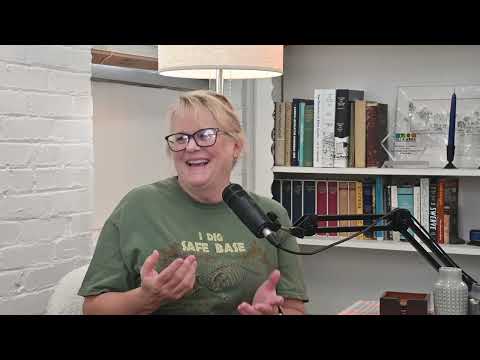
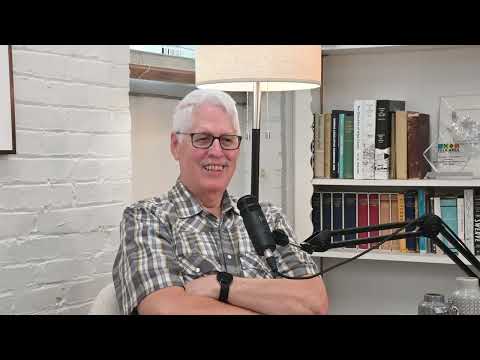
Darrell and Kathy Monfort have done a lot.
Throughout their 44-year marriage, they’ve remained active in the community.
They’ve farmed, operated Red Barn Veterinary Clinic for more than 27 years, assisted with countless 4-H and Allen County Fair endeavors and remain active with Farm Bureau.
“But our kids are our achievement in life,” Kathy said. “They’re going to be what we leave behind They’re what we’ve put most of our emotional energy into.”
If that’s the case, the Monforts — who will be honored as farm marshals at the upcoming Farm-City Days celebration — are leaving quite the legacy.
Darrell and Kathy spoke with the Register about their modest beginnings as a young couple on the barren, wintry plains of North Dakota; about raising their four children, Erin, Annie Roy and Andrew; and how Red Barn continues to grow still today.
BECOMING a vet wasn’t originally in Darrell’s cards.
The Iola native figured he’d be a farmer, like his father, Roy. He even considered going to college to becoming an Extension agent for agriculture.
Darrell’s regular interaction with the late Dr. Laurence “Dock” Shockey, a long-time veterinarian out of Kincaid, helped change his mind.
“Dr. Shockey did probably 95 percent of our calls,” he recalled. “I liked him, and I liked the science.”
So, Darrell enrolled at Kansas State University to study veterinary science.
It was at KSU that Darrell met Kathy, a Tulsa native who had moved to San Diego as a young child because of her father’s work with the Department of Defense. (He worked on missile silos throughout the Midwest before moving to California to work on booster rockets for the shuttle program.)
Perhaps with a bit of naivety, Kathy enrolled at K-State, also intent on becoming a vet.
See, even though KSU recruited her to attend — “Because of my grades” — Kathy soon found large hurdles:
1. It was about then that KSU announced it was not accepting out-of-staters into its vet program; and 2. Kathy was a woman.
About a year later, the first problem was solved.
“We were in love, so we got married,” Kathy recalled. “That meant I’d established residency in Kansas.”
But the gender issue remained.
“I made it to the interview process, and one of the questions they asked me — they knew Darrell and I were married — was ‘But who’s going to do the laundry? Who’s going to take care of your husband?’”
“I guess I will,” she replied meekly.
If she were the Kathy of today, she would have taken great umbrage at the questions. But she was still a young adult, trying to find her way through life.
So Kathy earned a degree in agriculture science.
“I graduated cum laude,” she said, “so I assume my grades would have been good enough for vet school.”
FRESH OUT OF college, the Monforts considered several locations for Darrell to begin his professional career. His first plan, to open a clinic in Mound City, was derailed when a banker backed away at the last minute from financing the cooperative.
They considered clinics in Wisconsin, Minnesota and Iowa, and one in southern North Dakota, where Darrell interned as a college student. Had an opening there not filled shortly before he graduated, “I’d probably still be there,” he said.
Alas, they found another clinic nearby, near Ashley, N.D.
Darrell worked there a shade under two years before deciding to branch out on his own.
Tri-County Veterinary Clinic opened its doors in 1978.
LIFE in the Dakotas was enjoyable, but took some adjusting.
“The people there were very nice, but they were also insular,” Kathy recalled. “If you weren’t from there, you were an outsider.
“And we were two kids who knew nothing,” she continued. “Should anybody have let us run our own business? I’ve gotta say no.”
Still, they made a go of it.
For the next four years, they braved the barren winter scene.
“One year, we got our first snow on Oct. 8, and we didn’t see the ground again until our anniversary, which is May 18,” she said. “It was a little frontier-ish in many ways.”
The winters were so harsh that several families who lived in towns would open their doors to their friends’ children during bad weather, just to ensure they could make it to school.
“Darrell didn’t mind it,” Kathy said, “although there were times he would spend his nights in the truck, stuck in a ditch. I didn’t mind the cold, but it was often lonely and dark.”
Darrell recalled one fateful weekend, in which he helped one farmer for a few hours, only to emerge from a barn to see it had snowed 8 inches in that time.
It was a Friday. He didn’t make it home, just a few miles away, until Monday.
IT WAS in the early 1980s that the farm crash crippled operations across the country.
Rising input costs, and depressed markets sent many out of business — in particular, several of Darrell’s customers.
He couldn’t look after cattle if there were none to be found.
“Our interest rate went to 24 percent,” Kathy recalled. “”When Darrell’s dad called and asked if he wanted to come back and farm, it wasn’t a hard decision.”
THE MONFORTS, with children in tow, moved to Iola in 1982.
Darrell considered briefly specializing in embryonic transplant work for cattle, but quickly realized the economy would not support such a venture in Iola.
He focused instead on his father’s farm operation — mostly livestock — with Kathy helping in any way she could.
“They taught me to drive a tractor,” she chuckled. “His dad would get so nervous because I couldn’t go in a straight line.”
With his veterinary background, Darrell soon found himself trading services with neighboring farmers. He’d treat their animals in his spare time.
“But after his dad got sick, it was just the two of us,” Kathy recalled. “Darrell would work with the large animals in the daytime. We had three kids at school, and I’ve have one baby on the tractor with me, and I’d go out and do disking or whatever needed doing. When the kids get home, we’d park the tractor and go inside. Darrell would get home, get on the tractor and plant.”
It was a struggle.
“Say what you will, but farming is probably the fastest way to get really poor, really fast,” she said.
Mother Nature had a large say in the matter.
“We had nine straight years of farming, between floods, storms or whatever, that we had to rely on our crop insurance,” Darrell said. “If we didn’t have our hogs, we wouldn’t have had food on the table.”
IN 1990, Darrell and Kathy agreed a change was needed.
They borrowed $5,000, bought some inventory and medication, and opened Red Barn Veterinary Clinic from their home on the northwest edge of Iola.
“We worked out of our kitchen,” Kathy joked. “If it’s not clean enough to do surgery on, it’s not clean enough to eat on, either.”
Business grew brisk enough that new quarters were acquired.
The Monforts took an old modular school building from Gas and moved it next door.
For about 20 years, they worked inside the small building, “usually walking over each other because it was so cramped,” Kathy said. “It was apparent there was a need for a new building.”
Their new building, a gleaming facility at 1320 1300 St. — just down the lane from their farmhouse — opened its doors in 2013.
More growth followed. Red Barn now employs four veterinarians, three licensed technicians and other hired hands.
Their most recent addition is a new equine barn, outfitted with spacious stalls, rubber floors and sufficient equipment on hand to perform surgeries on animals of all sizes. (The stalls should be complete within the next few days.)
The Monforts are fond of hiring students to work after school and during the summer.
“It’s absolutely worth it for kids who need to have the job, and need money for school, and need the experience,” Kathy said. “They’re a joy to have around.”
Their old clinic has been converted into a guest house, so visiting college students can stop for extended visits as well.
The Monforts treat their staff as family
Weekly meetings are each Monday at lunch.
“We’ll talk about business stuff first,” Kathy said. “Once that’s done, we celebrate birthdays, we celebrate Thanksgiving, Christmas, whatever.”
MENTION THEIR kids and the Monforts’ eyes light up. All have college degrees. “I’ll tell anybody about that,” Kathy boasts.
Erin Monfort-Nelson lives in Iowa. She has a master’s degree and runs a quilting business.
Annie Monfort lives in Kansas City, also with a master’s degree, and runs a successful brand management company, bringing in clients from across the country, including Martha Stewart.
Roy Monfort served in the Army, where he did intelligence work for the military. Upon completing his service, he was hired by a private firm out of Washington, D.C., as an intelligence analyst.
Andrew Monfort took his degree in chemical engineering and worked for several power plants in western Texas, saving up his money to the point that he took an extended sabbatical in March 2016 to tour Europe by bicycle.
“That was 18 months ago,” Kathy said.
His plans are ambitious, she continued. The Monforts received a message from him a few weeks back that he intends to open a micro-brewery and coffee roastery in Bosnia.
“We thought he was kidding,” Kathy said.
He wasn’t.
“Bosnia, surprisingly, is a growing region, and they’re pushing tourism,” she said. “We’ll see if it comes to fruition.”
THE MONFORTS plan to enjoy Saturday’s festivities, and take a break from their hectic schedule.
“Saturdays don’t happen around here the way they do for everyone else,” Kathy said.
Were it not for Farm-City Days, Darrell would likely be on the road, visiting farmers across southeast Kansas.
“This (Red Barn) has been a field of dreams,” Darrell said. “We didn’t anticipate having the number of people we have today, and we didn’t anticipate growing as much as we’ve done today. But we thought, if we build it, they would come. And they did.”