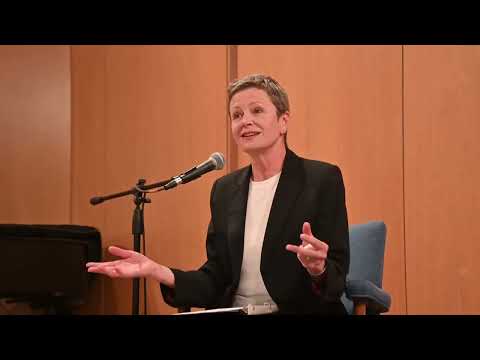
KANSAS CITY, Mo. — U.S. Department of Agriculture Secretary Brooke Rollins announced Thursday plans to boost American farmers by purchasing millions of bushels of crops.
In an effort to increase American exports, the USDA will purchase 417,000 metric tons of commodities immediately to support the international food aid programs. That’s equivalent to more than 16 million bushels of corn and sorghum.
ROLLINS MADE the announcement during a speech that earned a standing ovation at the Ag Outlook Forum in Kansas City, Missouri, where she outlined the Trump Administration’s efforts to aid a struggling farm economy.
“The cost of doing business for our farmers has increased drastically while commodity prices have slipped,” Rollins said.
The large purchase would benefit America First International Food Assistance programs, the McGovern-Dole Food for Education program and Food for Progress, which rely on U.S.-grown crops.
Rollins outlined a series of dire economic challenges facing farmers and ranchers in the United States, blaming the Biden administration for inflation and policies that “all but ignored the needs” of farmers.
SINCE 2020, the cost of seed has risen 18%, the cost of fuel rose 30%, labor costs are up 47%, electricity up 36%, machinery up 45% and fertilizer up 37%, she said. Largest of all was a 73% increase in interest expenses.
To address rising costs for farmers, Rollins said the Federal Reserve needs to keep lowering interest rates. The Trump administration is also reportedly repurposing “Biden DEI,” or diversity, equity and inclusion funds. Those could benefit farmers as soon as Oct. 2.
She touted seven new international trade deals, including 99% tariffs on Indonesia, increased rice exports from Japan and an ethanol deal with the United Kingdom.
Out of concern for undue foreign influence in American agriculture, Rollins also announced that the USDA and the U.S. Department of Justice signed a joint memorandum Thursday morning to scrutinize the agriculture marketplace through antitrust enforcement that promotes market competition, effective immediately.
Rollins addressed a pressing beef cattle shortage, which partially has to do with low inventory, a loss of cattle ranches and disease risk. Over the past decade, the U.S. has lost about 150,000 cattle operations, Rollins said. Many have been offshored or consolidated. U.S. cattle inventory is at its lowest in 75 years, she said.
She also promised new dietary guidelines for Americans that encourage beef, protein and whole milk consumption.
However, the USDA has no current plans to offer payments to beef producers.
“We see how the government getting involved can completely distort the markets, and so currently there will be no plan,” Rollins said. “No plan is even under consideration to insert ourselves through payments into the beef cattle industry.”
INSTEAD, Rollins said, the government will focus on freeing up land, using funding from the One Big Beautiful Bill for animal disease prevention, and, “hopefully inspiring the next generation of farmers.”
She told reporters following the speech that the USDA is not yet ready to announce a payment plan to aid farmers. During the first Trump administration, farmers received around $23 billion in subsidies.