GIRARD — Responding to the Kansas Supreme Court’s ruling last month, which found inequities in the state’s school funding system, lawmakers will convene a special legislative session on Thursday.
If they fail to agree on a palatable fix, the court could block $4 million in education funding, forcing schools to close.
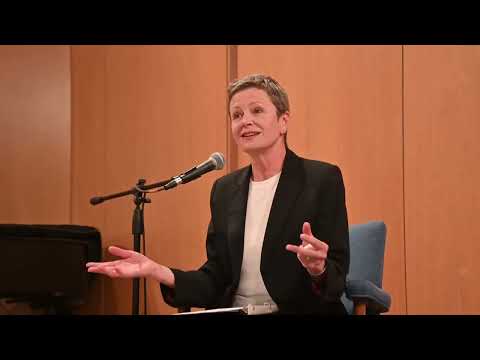
It’s against this unhappy backdrop that Mark Tallman, associate executive director for advocacy for the Kansas Association of School Boards, addressed a room of about 30 — mostly school administrators and area board members — at the Greenbush learning center in Girard on Tuesday.
The talk was part of KASB’s annual barnstorming “advocacy tour” aimed at equipping school personnel, as well as the general public, with a fact-based understanding of a topic too often wrapped in rumor, bad faith and accusation.
Tallman’s lecture, “Best of Times or Worst of Times for Kansas Education,” led with the good news.
PERFORMANCE
Kansas currently ranks eighth in the nation in terms of student performance when measured against a broad range of indicators, said Tallman. “Compared to the states closest to us and compared to the states like us, Kansas, on average, does better on student achievement.”
The key difference, however, explained Tallman, “is that all seven of these states spend more per pupil than Kansas,” which provides $11,702 in total per pupil revenue — a figure that includes federal, state and local sources.
As school funding in Kansas has been flat or in decline in recent years, said Tallman, “our performance has also changed. … It’s not that our performance has necessarily gone down, but it hasn’t increased as much as other states. … For instance, we’re at a higher graduation rate then we were 10 years ago, but our ranking is lower. Other states have increased their graduation rates even more.”
Opponents of increased school funding sometimes use the state’s high ranking as justification for their recalcitrance: “That’s really the essence of the state’s defense,” argued Tallman. “They say ‘How can we be inadequately funded if we’re doing this well?’
“But it’s not so much about absolute cuts. It’s about not keeping up with costs. … I think the challenge for us is to say, ‘However well we’re doing, are we doing well enough to continue to meet our needs?’”
FUNDING
While Kansas spent more than $6 billion on education in 2015 — up from $3 billion in 1999 — the state failed the simple macroeconomic test of keeping pace with inflation.
Adjusted for inflation, said Tallman, growth in Kansas education funding has been lower since 2008 than in any period since 1981.