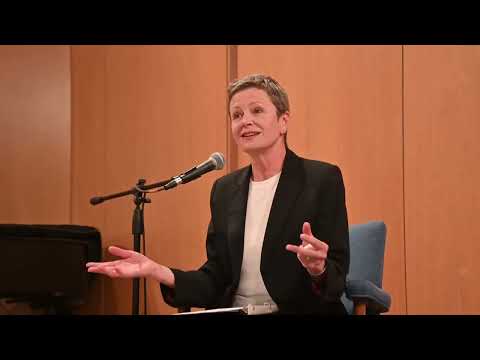
Kansas leaders are “shooting themselves in the foot to make a political statement,” Sheldon Weisgrau said here Thursday, of the state’s refusal to accept federal dollars to expand Medicaid.
Expansion is provided through the Affordable Care Act, most often referred to as Obamacare, and, he added, that’s where the political influence resides. Conservative Republicans in Congress and in Kansas and many other states abhor President Obama’s signature program, to the point of self-flagellation.
Weisgrau is director of the Health Reform Resource Project, a foundation-funded initiative to provide education and technical assistance to consumers and others in the implementation of health reform and the ACA in Kansas. He also is imminently familiar with critical access hospitals, of which Allen County Regional Hospital is one. He helped develop the rural hospital program, with the first opening in South Dakota and the second in Ransom, Kan. He spoke at ACRH and then at a noon meeting of Rotary.
Without ever falling into a plodding vein, Weisgrau recounted recent Kansas history of Medicaid assistance, known as KanCare since its administration was privatized.
“It is the biggest issue in Kansas today,” he said, with 56 percent ($1.8 billion in federal money) and 44 percent ($1.2 billion from the state) paying medical costs for 400,000 residents. Expansion was promised under ACA but was made optional for states by a Supreme Court ruling — the only portion of the health care plan not judicially upheld — and would have added 140,000 recipients in Kansas.
As is they fall into a financial abyss: Those who make too much to qualify for Medicaid under poverty guidelines and too little to qualify for purchase of insurance through ACA marketplaces.
“Many legislators think, and say, the program is for the poor, which is only half true,” Weisgrau said. Income consideration is just half the formula, the other depends on whether an applicant is a parent, frail, disabled or a child. “If a person fits a category, the state looks at income and decides” whether they will be included. Saying, “all in poverty are on Medicaid just isn’t true.”
Also, the financial gap caveat puts some at a disadvantage if they were to take a job.
Weisgrau explained: “If a mother with two children were to work half time at a minimum wage job, she would make too much to qualify. If you have diabetes, for example, you need Medicaid and you can’t give it up to take a job that disqualifies you.”
THE ACA provision for Medicaid expansion, practically all funded by the federal government, took effect in 2014. For 2014, 2015 and 2016, the feds paid all of the expansion medical costs. It will be 95 percent in 2017, 94 in 2018, 93 in 2019 and 90 percent in 2020 and beyond.
Gov. Sam Brownback’s opportunity to express his conservatism — some would describe it differently — occurred when several states sued, claiming expansion was unconstitutional coercion on the part of the feds.
Thirty-one states, and the District of Columbia, went ahead, although some designed individual acceptance plans. The other 19 states, including Kansas, categorically rejected the federal offer of expansion. More recently some have reconsidered, but have yet to pull the trigger on federal grants.
Of the 150,000 Kansas citizens left on the outside looking in are 7,400 military veterans and spouses. None is a non-citizen living in Kansas illegally.
Complicating matters is that thousands of employers, including 12,402 in food service, don’t offer insurance benefits. Weisgrau mentioned food service prominently because that is where many minimum wage or otherwise low-paying jobs are found.
“Expansion would be revenue neutral for the state,” with it paying just 10 percent in benefits in 2020 and in later years.