TOPEKA — Gov. Laura Kelly wants the Republican-dominated legislative committee drafting a new state funding formula for K-12 public school districts to work on behalf of all Kansans by resisting pressure to funnel tax dollars into private schools.
Kelly, a Democrat earing the home stretch of her second term as governor, said the existing formula was the product of years of work by the legislative and executive branches of state government and met the judicial branch’s view of Article 6 of the Kansas Constitution by making suitable provision for financing the state’s educational interest in children.
THE CURRENT formula has led to full funding of public school districts, Kelly said. It could be improved before expiring in 2027, the governor said, but major overhaul could invite years of new litigation.
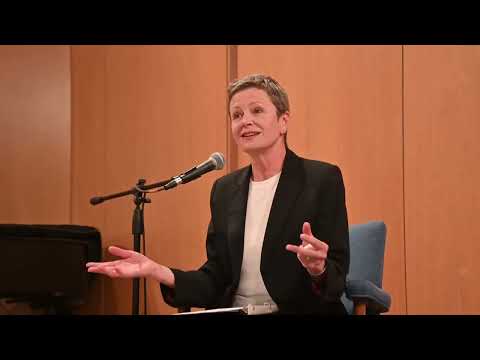
“Obviously, what I would really like is for them to tweak around the edges of what we’ve already got,” Kelly said on the Kansas Reflector podcast. “This is a formula that has really been decades in the making. It works for Kansas. Are there things that could be better, could be done differently? I’m sure that there are.”
“I would hope that, you know, deep down, what they’re really trying to do is to make our public school system the best in the country,” Kelly said. “Not looking for ways to undermine it and divert funds from that to private schools.”
During the interview, Kelly discussed issues shaping the final 20 months of her service as governor, including budget and policy decisions of President Donald Trump, the 2026 vote on a state constitutional amendment to elect members of the Kansas Supreme Court and formation of the state’s early childhood education office.
She looked back at pivot points in the 2024 session of the Legislature, most notably decisions to emphasize state income tax reductions rather than property tax reform.
Trump’s influence
Kelly, who chairs the Democratic Governors Association, expressed disagreement with Trump’s willingness to upend federal funding to states in ways that generated chaos and harmed people. Thousands of federal workers have been sacked along with hundreds of millions of dollars in funding slashed, she said.
In Kansas, sudden withdrawal of a federal grant led Kelly to authorize layoffs of 56 employees at the Kansas Department of Health and Environment.
She said sweeping reductions in federal funding of Medicaid, the health program relied on by people with disabilities, low-income children, elderly adults and pregnant women, would be devastating in Kansas.
“We were taking a very public stance and working very hard with our congressional delegations and others to ensure that Congress does not make those kinds of drastic cuts to a program that is extraordinarily important, not only to some citizens of the state of Kansas, but to the state itself. It would create economic havoc if they were to withdraw Medicaid funding,” Kelly said.
Kelly said she would work against the proposed amendment to the Kansas Constitution to allow direct public election of state Supreme Court justices and do away with the merit-based process vesting governors with responsibility to fill vacancies on the state’s highest court.
MORE THAN $100 million was spent on this spring’s Wisconsin Supreme Court election. It set a national record for expenditures on a state judicial race.
“I don’t think Kansans want to go that way, and I think they will speak loudly in August of 2026 just as they did in August of 2022 when the Legislature tried to essentially eliminate reproductive rights in the state of Kansas,” Kelly said.
By two-thirds majorities — 27-13 in the Senate and 84-40 in the House — the Kansas Legislature disagreed with Kelly by voting to place the Supreme Court amendment on ballots next year.