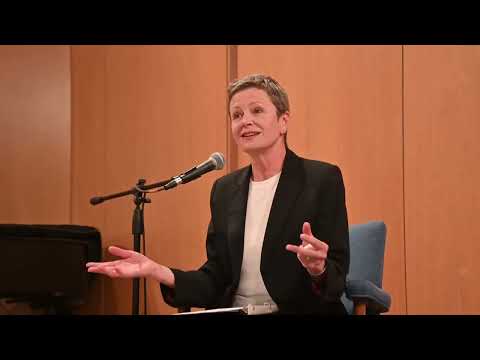
Ron Wilson stopped by Iola Tuesday evening to offer an optimistic opinion on the best Kansas has to offer — and his examples were anything by ordinary. WILSON BEGAN his stories with the Landoll Manufacturing, started by Don Landoll, of Marysville. FROM THERE Wilson went on to describe the success stories of Cobalt Boats, out of Neodesha, Brush Art in Downs and Robot Zone out of Winfield.
Wilson, the director of the Huck Boyd National Institute for Rural Development at K-State, produces a weekly radio program called “Now, That’s Rural.” The program celebrates the entrepreneurial spirit of Kansas by examining different types of success stories from across the state. He spent some time Tuesday giving different examples of these stories.
His presentation was started with a moment of silence for Emerson Lynn, who passed away last week. Lynn was longtime publisher of the Register.
“When I think of the community of Iola, I think of Emerson Lynn,” Wilson said. He also shared Lynn’s thoughts on business in Kansas.
“Emerson used to tell me, ‘there’s more enterprise in Kansas than you think,’” Wilson said. “Now I believe him.”
“Don loved to fly, so he went to join the Air Force,” Wilson said.
But, those plans didn’t seem to catch on. Landoll flunked his entrance examination into the Air Force and was sent back home to live in Marysville — where he began welding.
Now, Landoll Manufacturing has 700 employees and is one of the more successful businesses of its kind in the country. Recently, Wilson said, the business had been doing well enough that they went and bought a company plane.
“Just so Don could fly it,” Wilson said.
“We should build on our core assets,” Wilson said. “Entrepreneurial. Innovative. Kansas.”
His final example hit close to home for people in Allen County.
The story of Joe Works and Roger Baker’s ingenuity and ambition through B&W Trailer Hitches is one that Wilson has used in his radio program.
“Now that’s the kind of success story we love to tell,” he said.
He spoke about Joe’s decision to hold onto the employees during the recent economic downturn — he kept them on the payroll to do service projects and community improvement projects. Then, when the economy turned around, they were there to get back into business.
“He used their skills to improve the community,” Wilson said. “It was a win-win-win for the community.”
He concluded his speech with a reading called “You Know When You’re in a Rural Community When…” He read off different qualities of rural communities, some witty and some touching.
“You know you’re in a rural community when someone asks you how you’re doing, and listens,” Wilson read. “Now that’s rural.”
Wilson celebrates Kansas ambition