America has given away a tremendous amount of political power to special interests that don’t care a whit about the national welfare, David Broder told a packed hall in Lawrence Monday night.
And their power and influence was increased significantly when the U.S. Supreme Court ruled earlier this year that corporations had the same free speech rights as individuals, he said.
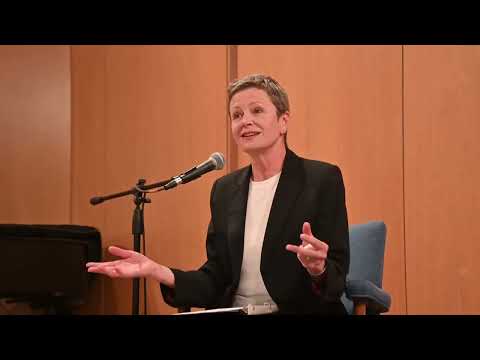
Broder, columnist and political reporter for The Washington Post, spoke at the Dole Institute of Politics on the KU campus in a question-and-answer format.
He said he couldn’t remember a time when the atmosphere in Congress was more uncivil, more partisan.
The problem lies primarily with Congress. Democrat and Republican senators and representatives don’t talk with each other. They shout at each other, but they don’t discuss, he said. Issues don’t get resolved without a reasoned exchange of views, he said.
The veteran political reporter said he knew there would be no cooperation between the parties when President Barack Obama sent his stimulus package to Congress at the beginning of 2009.
“The nation was in an economic crisis. Every morning the news was worse: plants closing, unemployment climbing. The public was scared. It was the worst recession since the Great Depression of the 1930s. You would think that the Republican leadership would have said, this is no time for partisanship, we should work together to tackle the crisis.
“But that’s not what happened.
“There were only three Republican senators who voted with the administration. And there were no Republicans — zero — who supported the stimulus bill,” he recalled. “That was incredible. Were they saying that the recession only affected the members of one party?”
Asked if he thought the November elections would change the atmosphere, Broder said he “was not wildly optimistic.”
He said he thought that the political polls were accurate and that the Republicans would take control of the House and might take the Senate. He said the Republicans probably lost the chance to win a seat in Delaware when Christine O’Donnell won the nomination. The latest poll there gave the Democrats a 19-point lead.
“And that loss may make the difference in the Senate,” he said.
But, Broder said, “elections make a difference.” Being in the majority means Republicans in the House will have part of the responsibility for how the nation fares for the next two years, which could change their attitude.
BOB DOLE’S legacy, Broder said, is that he became the model for what a good senator should be.
“While people like Dole were in charge in Congress the public interest came first. Issues were discussed and resolved. Government worked,” Broder said.
In his opinion, today’s federal government is dysfunctional. That is why, in his opinion, the public’s opinion of Congress is so low.
“Members of Congress coming home to campaign should be getting an earful,” he said.
“Today politicians are not judged by what they accomplish for the good of the people, but by how much damage they can do to the other party,” he said, and added that he thought the leadership was at fault.
When the leadership is uncivil, is viciously partisan and makes no effort to work with or communicate with the opposition, then, he said, it is no surprise that the members who elected those leaders act likewise.
— Emerson Lynn, Jr.
N.B. Broder’s twice-weekly column appears in the Register.