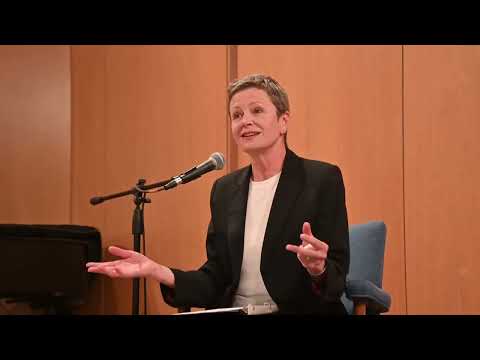
A small group gathered at Riverside Park’s community building in Iola Thursday to learn about a proposed constitutional amendment that could significantly change how Kansas selects its Supreme Court justices.
The event, titled “Justice for All: The Future of Kansas Courts,” was hosted by Kansas Appleseed and led by civic engagement manager Logan Stenseng. The nonprofit organization is holding presentations across the state to explain a ballot measure expected to appear before voters during the Aug. 4 primary election.
The proposed amendment would replace the current merit-based system used to select Kansas Supreme Court justices with statewide elections. If approved, the change could reshape how the state’s highest court operates and how judges reach the bench.
Stenseng told attendees the decision could have long-term consequences.
“The decision that Kansas voters are going to make on Aug. 4 is going to be potentially a generational shift in how justice is framed in our state,” he said.
KANSAS’ court system is structured into three main levels: district courts, the Court of Appeals and the Kansas Supreme Court.
Under the current system, Supreme Court justices are selected through a merit-based process created by a constitutional amendment in 1958.
A nine-member nominating commission reviews applications, interviews candidates and sends three finalists to the governor, who chooses one appointment. Justices must then stand for retention elections — first after one year and then every six years.
Candidates must be at least 30 years old and have significant legal experience in Kansas.
Stenseng described the application process as similar to applying for a demanding professional position, with extensive vetting by the commission. While many Kansans may not closely follow the process, he noted that the interviews and proceedings are open to the public.
THE CURRENT selection system was adopted following a political controversy in the 1950s known as the “triple play” scandal.
In 1956, outgoing Gov. Fred Hall resigned shortly before leaving office after the state’s chief justice stepped down. The lieutenant governor then briefly became governor and appointed Hall to the vacant Supreme Court seat.
The maneuver sparked public outrage at the time and led lawmakers to pursue reforms. “That really frustrated Kansans,” Stenseng said.
According to Stenseng, Kansans responded by approving the merit-based selection process to reduce political influence over the court. Voters approved the process with about 60% support in 1958.
“That was the last really big historical event that shaped our appointment process,” he said. “There’s a lot of substance to this — there’s history to this. Kansans have actually been in a place where we once had partisan elections for Supreme Court justices. They decided they didn’t like it and believed it bred scandal and corruption.”
Since then, Kansas Supreme Court justices have been barred from participating in partisan political activity or accepting campaign contributions. They stand for retention elections but do not run against opponents.