
Imagine that you walk into a courtroom and find that the judge about to hear your case is also the regional chairman of the ruling party. You might be imagining China, maybe North Korea, perhaps Venezuela or Nicaragua.
You probably aren’t thinking Kansas.
But those are the actual stakes you’ll be playing for this August, when we’ll be voting on a constitutional amendment that seeks to change how we select justices for our state Supreme Court.
You won’t see that ugly but critical detail on your ballot when you vote, because lawmakers deceitfully excluded it from the official ballot summary prepared for the Aug. 4 election.
To find it, you have to go back to the Legislature’s final summary-of-legislation note on Senate Concurrent Resolution 1611 from last year: “The resolution proposes removing the prohibition against Kansas Supreme Court justices directly or indirectly making contributions to or holding any office in a political party or organization or taking part in political campaigns.”
I don’t know about you, but it kind of makes my skin crawl to think of Supreme Court justices who could also be party bosses, raising money and campaigning for the legislators and governors who make the laws they interpret.
That’s not what judges are for.
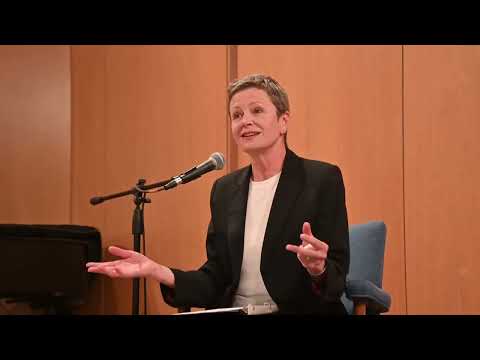
Gloria Farha Flentje, an attorney and the immediate past chairwoman of the Kansas Supreme Court Nominating Commission, explained why politicizing the Supreme Court is a bad idea this week, during a “Tuesday Topics” discussion at the downtown library sponsored by the League of Women Voters.
“What do we want from a justice? We want a justice, when deciding a case, to consider only three things, the facts demonstrated to exist by admissible evidence, the issues raised by the parties and their counsel, and the governing law,” she said.
“We want a person who can put aside their personal beliefs on the outcome, a person who is faithful to the rule of law, and a person who is not influenced by making a decision that will persuade people to like them, or to follow them, or make sure they can get reelected the next time they run for election.”
Kansas elected its justices from statehood until 1958.
Outraged voters amended the Kansas Constitution after a cabal of corrupted politicians gamed the system to hold onto power after being voted out of office.
The reformed system that emerged is called merit selection, with a nominating commission of lawyers and non-lawyers who evaluate all the applications and narrow the list to three finalists.
The governor then chooses one of the three nominees for appointment to the court.
The lawmakers supporting direct elections make a lot of baseless claims about the process, but their motivation for proposing an amendment is narrow and transparent. They simply don’t like some decisions the court has rendered in recent years, especially on abortion and school finance.
It’s the same crowd that brought us the 2020 Value Them Both amendment, an effort to bypass the court and clear the way for banning abortions.